The beauty of the rolling hills, cactus-studded landscapes, and color-washed mountains at sunset offer up an incredible backdrop for private luxury living.
The charm of the Sonoran Desert speaks for itself, but we also must understand we’re not the only inhabitants of this environment. In honor of National Wildlife Day, here’s a fun, professional guide to some of the critters you might meet around our Scottsdale home, plus smart tips for sharing the neighborhood safely.
Who’s Who on Your Morning Walk
Mule and White-Tailed Deer
Of the larger and more common animals you may see, mule and white-tailed deer both roam the Sonoran region, but they play by slightly different rules. Mule deer wear those signature satellite-dish ears and move with a high, springy “stot”. White-tailed deer here are usually the smaller Coues variety—sleek, brush-loving, and quick to flash that bright white tail. You may see a herd walk across a fairway toward the end of your early- or late-day round as both browse at dawn and dusk on native shrubs. If you meet them, admire from a distance, keep dogs leashed, slow down on nighttime streets, and let them pass.
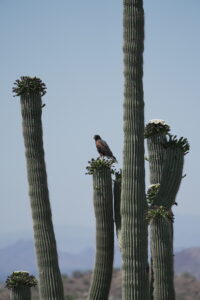 Birds
Birds
There are a wide variety of birds you can see around Desert Mountain. You may see Harris’s hawks perched up on a single saguaro, or a red-tailed hawk circling overhead. A rarer sight might be a great horned owl at night, or more commonly a smaller bird like a cactus wren making its home in a cactus. Each bird has its own colorful markings which makes them a popular viewing for Desert Mountain residents.
Bobcats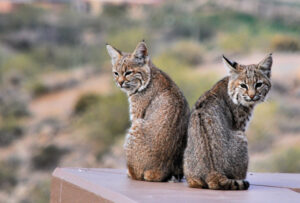
Compact wildcats with tufted ears and a bobbed tail, bobcats hunt rabbits and quail and are expert fence-hoppers. Their agility allows them to jump up to 10 feet, and their thick and tough paw pads allow them to climb cacti for surveillance and escape. They tend to be quite shy and avoid humans, but it is still important to admire from a distance and give them a quiet path to move on. Remember to bring small pets indoors as their prey are smaller animals.
Coyotes
Lean, clever, and usually more curious than confrontational, coyotes help keep rabbit and rodent numbers in check. You may hear one or a pack through their characteristic howl. Coyotes have adapted to thriving in cities and because of this, become comfortable around humans, usually as a result of feeding or indifference. While timid and often run away when challenged, keeping pets leashed, making yourself big, and securing any food sources are the best ways to keep yourself safe.
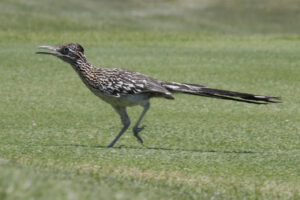 Roadrunners
Made famous from its victories over Wile E. Coyote, roadrunners are well known for its long, lean frame as they sprint through the desert terrain. They can reach speeds of around 20 mph to either escape predators or run after fast-moving prey. While they can fly, they rarely do. A large part of their diet are insects, rodents, and smaller mammals, including snakes. Roadrunners are charismatic and curious creatures, but can be fierce. Keep away all food sources and protect your pets.
Rattlesnakes
One of the most well-known among desert wildlife, rattlesnakes are vital rodent predators, and most known for that distinctive rattle. It’s a warning and their way of saying, “back off.” If you do hear a rattle, freeze, locate the snake, then slowly back away. They regulate body temp by moving between sun and shade, and most bites happen to people trying to handle them. If you see one, give it space and leave it be, or call a professional for safe removal if one shelters in a yard.
Gila Monsters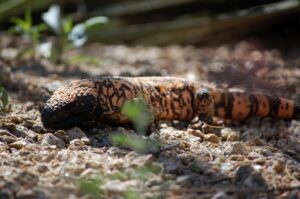
Staking claim as the largest lizard in the U.S., the Gila monster is also one of the world’s few venomous lizards. Protected in Arizona, they move slowly and spend most days in burrows. When it’s warmer, you may rarely see one out in the wild. They store fat in their tails and may only eat a few big meals a year. If you see one, don’t go near it or pick one up. Its bite is a defensive measure, and the teeth and venom cause considerable pain. It is also a violation of state wildlife regulations to handle one in any way.
Javelina
You will see these hoofed mammals roaming around in large herds, commonly referred to as a squadron. These desert natives have very poor eyesight but make up for it with a keen sense of smell. They’ll target plants and cacti for food, and seek out shaded areas for sleep, and will do most of their hunting at night when it’s cooler. If you see one, keep your distance and avoid feeding – ever.
The Sonoran Desert is one of the most biodiverse deserts on Earth, and we’re lucky to live in the middle of it. If you’ve been thinking about what life is like in the desert southwest, contact our Membership team to learn a little more. With a bit of know-how and neighborly respect, you can enjoy amazing desert wildlife moments from your patio or anywhere across the Mountain.


