And in the thick of summer, that sky is putting on its best show of the year.
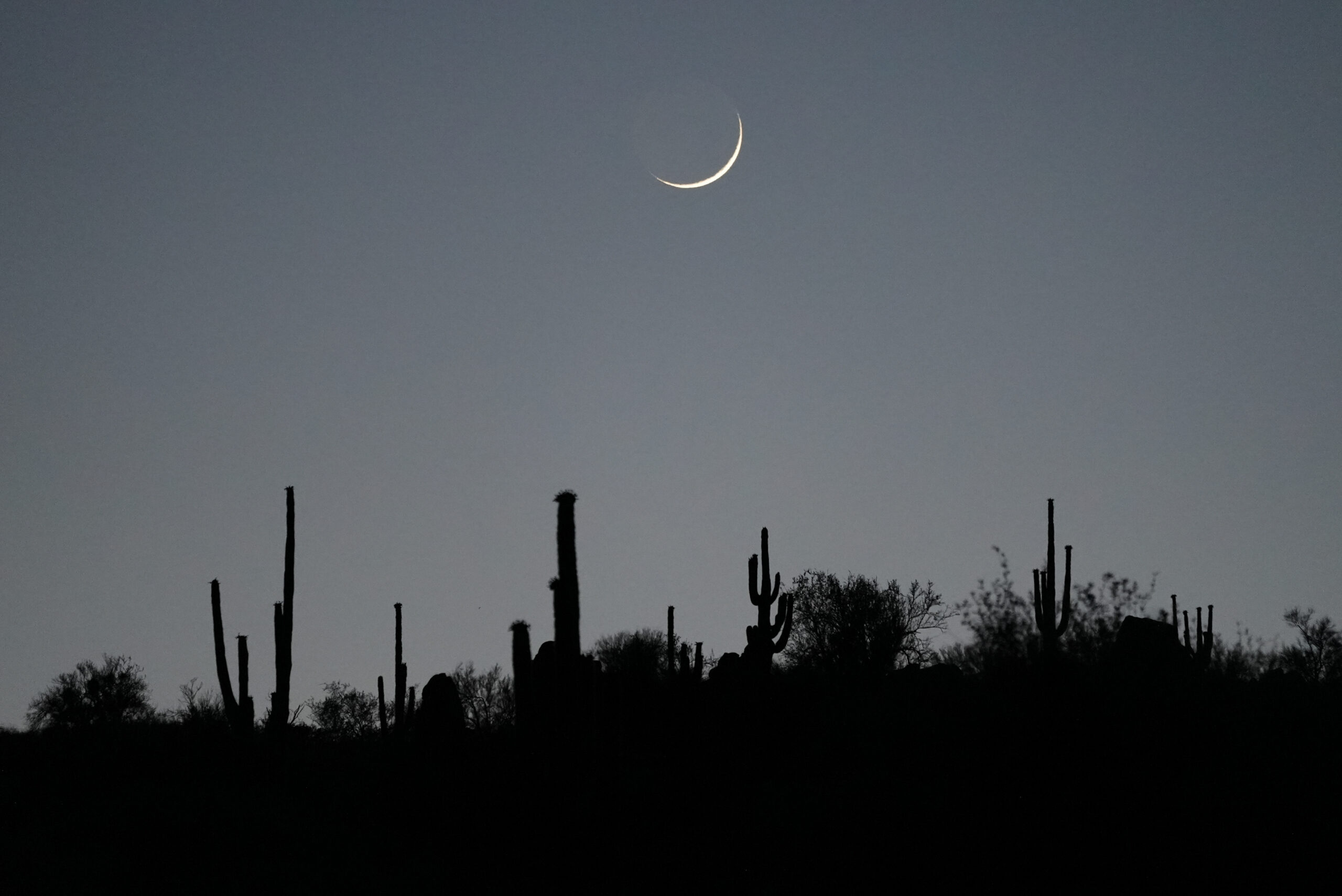
Here’s something that surprised me: the Milky Way is no longer visible to nearly 80% of North Americans. We’re the lucky exception. Cave Creek is a dark-sky-minded town — it has its own lighting standards, a local group pushing for Dark Sky certification, and star parties out at Spur Cross. Add our dry desert air and our distance from the bright city lights, and Desert Mountain gets some of the best Arizona stargazing in the Valley, right from home.
Late summer is the time to do it. On a clear, moonless night, face south and you’ll see the Milky Way itself — a hazy river of billions of stars arching overhead. You’re looking straight into the center of our galaxy, low in the south near Scorpius and Sagittarius. Find bright red Antares, the heart of the Scorpion, and the little “teapot” of Sagittarius just beside it — the Milky Way looks like steam rising from its spout. Those three brilliant stars high overhead are the Summer Triangle, your easiest landmark up there.
Best of all, you need zero equipment. Step outside on your patio after about 9 p.m., once it’s fully dark, and give your eyes a good 15 to 20 minutes to adjust — and don’t check your phone, or you’ll start over. A free stargazing app like SkyView, set to red-screen mode, will name whatever you point it at. The darker the night, the better, so skip the nights around a full moon.
And if you’d rather not do it alone, come out with us. Every month we host a Sunset to Full Moon Hike, timed so the rising moon lights the trail. This winter we’re also adding Sunset & S’mores hikes at The Ranch: an easy evening walk that ends at the fire ring with cocoa, marshmallows, and a sky full of stars.
Honestly, the best observatory for Arizona stargazing in the state might be your own backyard. Step outside tonight and see.